
Books ›
1862 · Paris
Les Misérables
A convict, a bishop's gift and a policeman who never forgets: Jean Valjean's long road through France, from 1815 to the barricades of 1832.
How this book came to be
Victor Hugo wrote most of Les Misérables standing at a desk in a glass room at the top of a house on Guernsey. He was France's most famous writer, and he was living in exile.
The book began long before that. Hugo started it in Paris in 1845, under the title Les Misères. He sat in the upper house of parliament at the time, and poverty and the harshness of the law had troubled him for years. Then the revolution of 1848 broke out. Politics swallowed him, so the manuscript went into a trunk.
In December 1851 the president, Louis-Napoléon Bonaparte, seized full power in a coup, and he soon crowned himself Emperor Napoleon III. Hugo tried to organize resistance and failed, so he fled to Brussels on a false passport. He moved on to Jersey, then in 1855 to Guernsey, a British island close to the French coast. There he bought Hauteville House. When the emperor offered the exiles an amnesty in 1859, Hugo refused it, because going home would have meant accepting the regime.
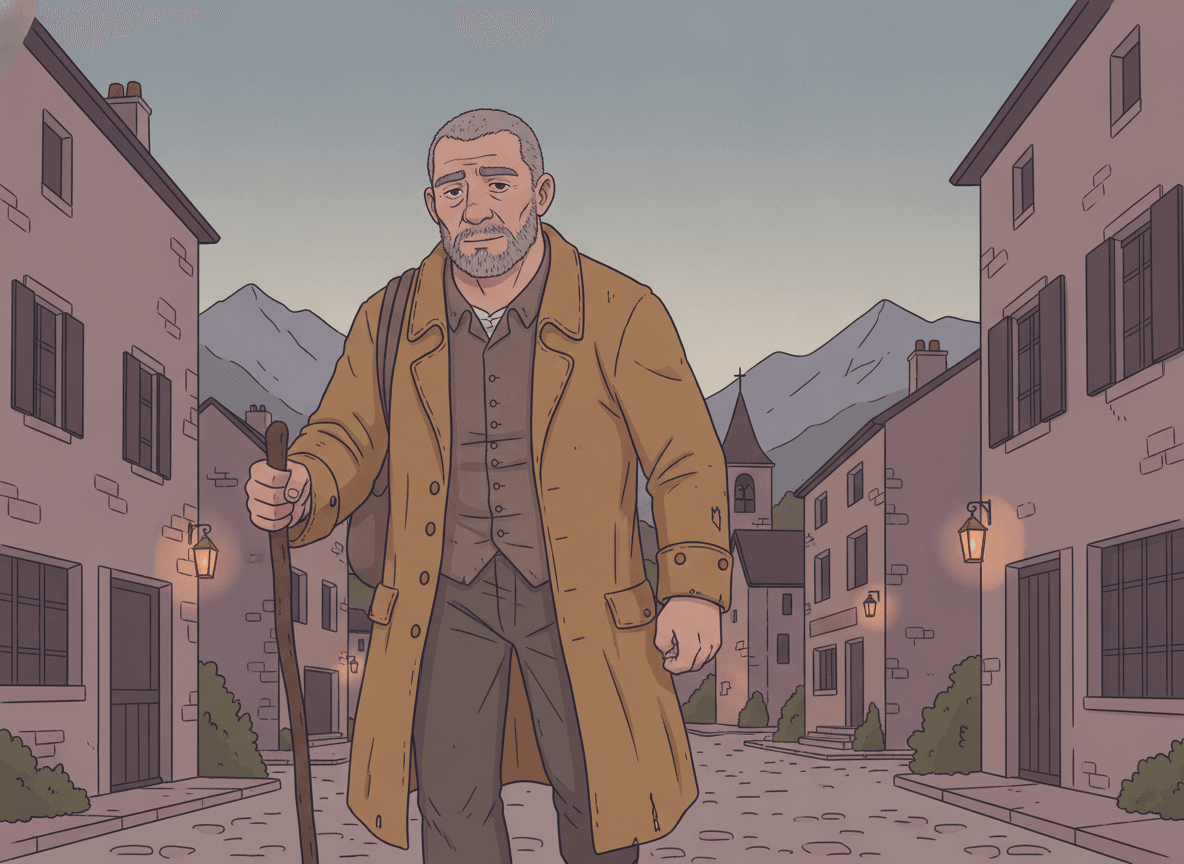
In 1860 he opened the trunk again. Exile had given him time and sharpened his anger, so the novel grew enormous. It follows Jean Valjean, a former convict who tries to live honestly while the law hunts him, through the France of 1815 to 1832. Hugo finished the draft on 30 June 1861 in a hotel beside the battlefield of Waterloo, where he had gone to write his chapters on the battle.
A young Belgian publisher, Albert Lacroix, borrowed heavily to buy the rights, for a sum usually given as 300,000 francs. He had to earn it back fast, so he planned the launch like a campaign. The first part came out in Brussels and Paris in the spring of 1862, and editions in other European cities followed almost at once. When the next volumes went on sale in May, buyers packed the street outside the Paris bookshop.
Critics were cooler than readers. Gustave Flaubert, the author of Madame Bovary, ran the book down in his private letters. In 1864 the Catholic Church placed it on the Index, its list of books Catholics were forbidden to read. None of this slowed the sales. An American translation appeared within months. During the American Civil War, Confederate soldiers read it in camp and called themselves "Lee's Miserables", after their general, Robert E. Lee.
Hugo went home in 1870, once the empire had fallen. His novel kept traveling without him. It has been filmed many times, and the musical drawn from it, first staged in Paris in 1980, has been playing in London since 1985.
Continue in the app
Open the app for the illustrated story of this book, the world it was written in, and the full text, a free public-domain edition, to read on screen or hear read aloud.
- ✓ The illustrated story of the book
- ✓ The world it was written in, on the map and timeline
- ✓ The full text, free, read or read aloud
Illustrations are created with AI assistance. Summaries are written with AI and reviewed by the editor. Book metadata comes from Wikidata and Open Library.