
Books ›
1897 · London
Dracula
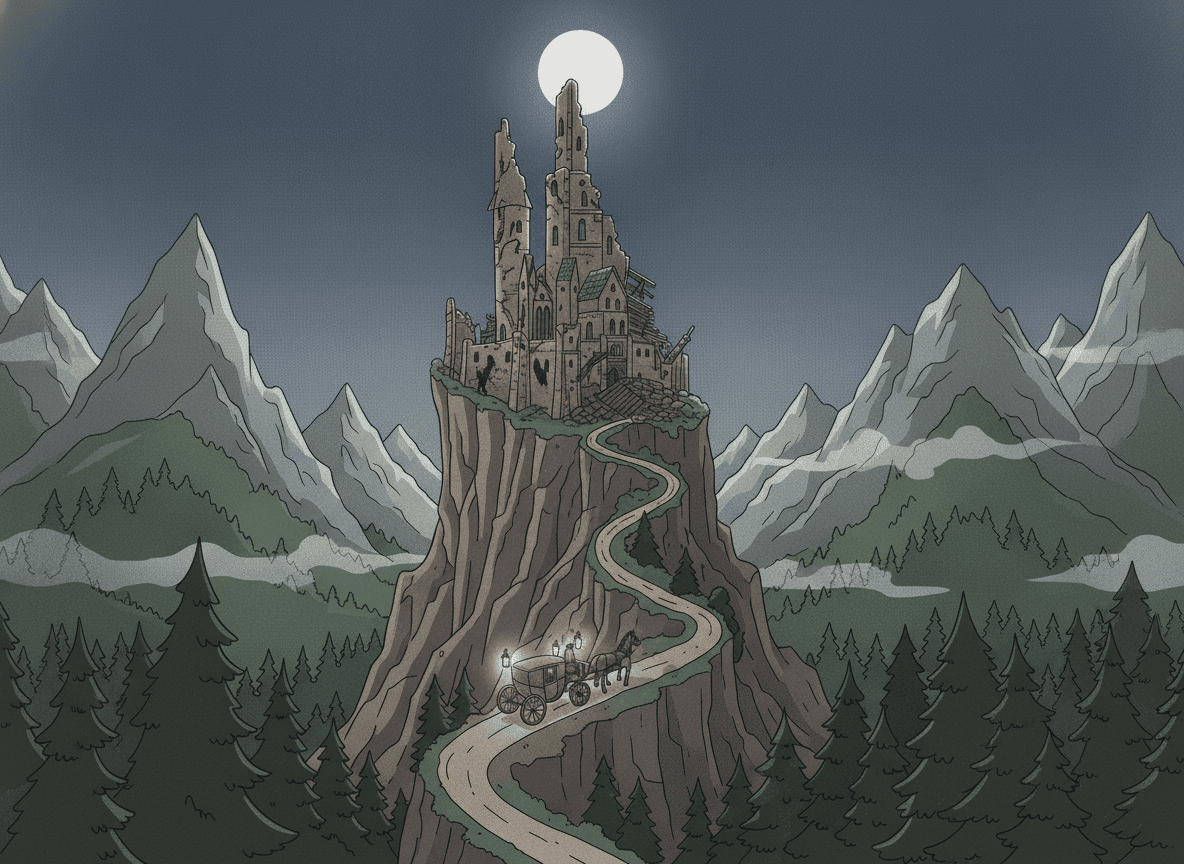
A property deal in the mountains, and the oldest thing in Europe books passage to England.
- Author
- Bram Stoker
- Written
- 1897
- Original language
- English
- Set in
- London, United Kingdom
How this book came to be
Dracula is a novel told entirely through documents: letters, diary entries, telegrams and newspaper clippings, assembled so the reader pieces together the hunt for an undead nobleman who moves from Transylvania to England. Its author, Bram Stoker, wrote it in the margins of a very busy life.
By the 1890s Stoker was the business manager of the Lyceum Theatre in London, running the affairs of Henry Irving, the most famous actor on the English stage. That meant tours, accounts, and endless correspondence, so the novel was built slowly in stolen hours. His working notes survive at the Rosenbach Museum in Philadelphia, and they show roughly seven years of planning, with dated outlines and character lists.
The notes also record a change that made the book. Stoker's villain was first called Count Wampyr. On holiday in the Yorkshire seaside town of Whitby in 1890, he borrowed a book in the local library by William Wilkinson about Wallachia and Moldavia, regions of what is now Romania. A footnote glossed the name Dracula as meaning devil. He copied it out, and the count had his name. Whitby gave him more than that: the wreck of a Russian ship on its coast years earlier fed the scene of a ghost ship running aground there.
Stoker's imagination had older roots. As a small boy in Ireland he was bedridden for years with an illness never clearly diagnosed, and his mother Charlotte told him stories, including her memories of a cholera epidemic in Sligo, with its terror of the dying and the too-quickly buried.
Published in May 1897 by Archibald Constable, the book sold steadily rather than sensationally, and Stoker died in 1912 without wealth. The afterlife came later. In 1922 the German film Nosferatu lifted the story without permission, and Stoker's widow Florence sued, winning an order that the prints be destroyed. Copies survived anyway. Then Bela Lugosi put on the cape in 1931, and the count became one of the most filmed characters in cinema.
Continue in the app
Open the app for the illustrated story of this book and the world it was written in. The book itself is in the public domain: the app opens the free text in its reader, on screen or read aloud with Premium.
- ✓ The illustrated story of the book
- ✓ The world it was written in, on the map and timeline
- ✓ The free public-domain text, opened in the app's reader
Illustrations are created with AI assistance. Summaries are written with AI and reviewed by the editor. Book metadata comes from Wikidata and Open Library.