
Books ›
c. 442 BC · Thebes
Antigone
A girl, a dead brother, and a law she will not obey.
- Author
- Sophocles
- Written
- c. 442 BC
- Original title
- Ἀντιγόνη
- Original language
- Ancient Greek
- Set in
- Thebes, Greece
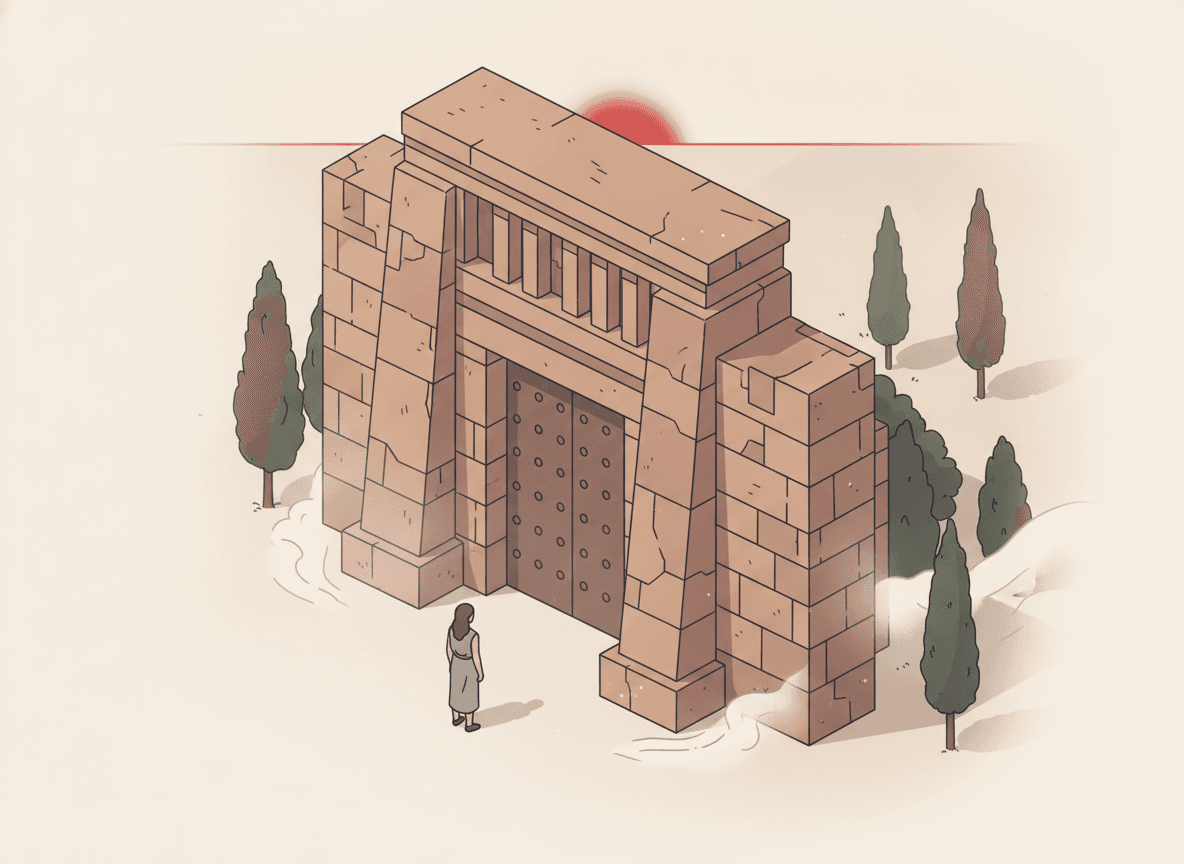
How this book came to be
Sophocles wrote Antigone around 442 BC, in an Athens near the height of its power. He was in his fifties, a well-known figure in the city, and not only a playwright. He held public offices and served as a treasurer of the Athenian empire's funds. Plays in Athens were not private entertainment. They were staged at the festival of Dionysus, a religious and civic event where thousands of citizens sat together and playwrights competed for a prize.
The play is a tragedy about Antigone, a young woman who buries her brother against the order of Creon, the ruler of Thebes, and pays for it. Burial mattered enormously to Greek audiences, because they believed the unburied dead could not find rest, and caring for a dead relative was a sacred family duty. So the collision is not stubbornness against law. It is one obligation against another.
Sophocles drew on the Theban legends, stories about the cursed house of Oedipus that Athenians already knew well. That familiarity was the point. His audience knew roughly what happened, so the interest lay in how he framed the choices and what he made the characters say.
Ancient sources report that the play was so admired that Sophocles was elected general soon afterward, serving alongside Pericles, the leading Athenian statesman, in a campaign against Samos. Historians treat that story with caution, since it may be a later embellishment. What is certain is that he wrote something like 120 plays and won first prize many times, though only seven survive complete.
Antigone survived because scribes kept copying it through antiquity and the Byzantine centuries. Its afterlife has been unusually political. Hegel, the German philosopher, read it as a clash between family and state in which both sides hold part of the right. During the Second World War, Jean Anouilh staged a French version in occupied Paris that audiences read as a coded argument about resistance and obedience. Since then it has been reworked in South Africa under apartheid, in Ireland, in Latin America, in Syria. It keeps returning wherever someone asks whether a law can be obeyed and still be wrong.
Continue in the app
Open the app for the illustrated story of this book and the world it was written in. The book itself is in the public domain: the app opens the free text in its reader, on screen or read aloud with Premium.
- ✓ The illustrated story of the book
- ✓ The world it was written in, on the map and timeline
- ✓ The free public-domain text, opened in the app's reader
Illustrations are created with AI assistance. Summaries are written with AI and reviewed by the editor. Book metadata comes from Wikidata and Open Library.